3 Key Advantages of Rear-Loading Lockers
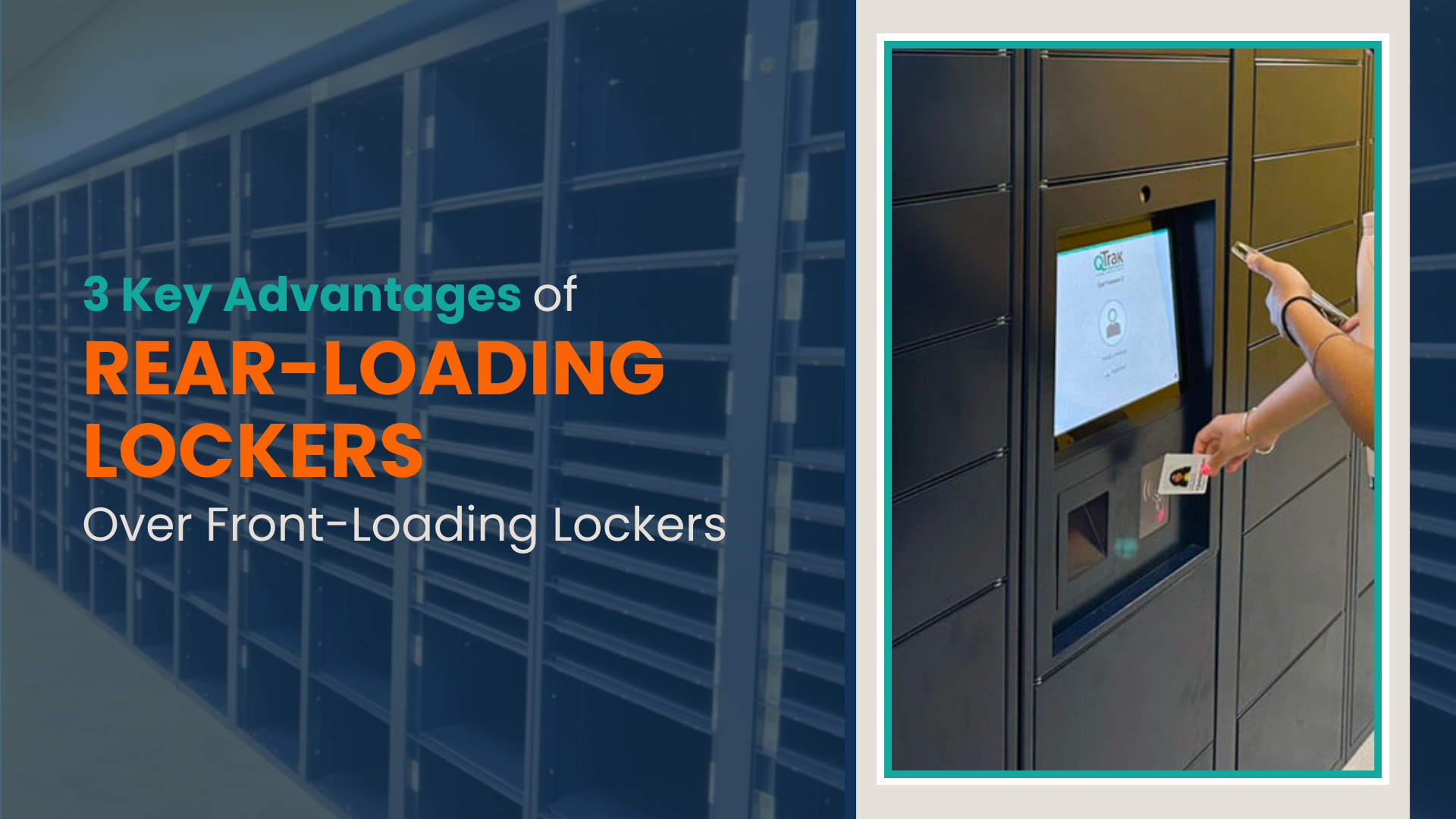
Selecting a secure mail or package locker system is an important decision for any organization. One of the first questions that often arises when evaluating locker solutions is:
“What’s the difference between front-loading lockers and rear-loading lockers?”
While both serve the same core purpose, they differ in installation requirements, user interaction, and day-to-day workflow. These differences can significantly influence operational efficiency, user experience, and long-term facility management.
This article outlines three key advantages of rear-loading lockers over front-loading systems, focusing on the operational and design benefits that matter most to modern facilities.
1. Separation of Delivery and Pickup Areas
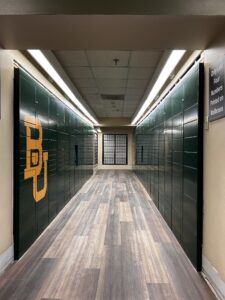
Rear-loading systems create a clear physical and operational separation between delivery personnel and end users. All sorting and loading activities take place in a secure mailroom located behind the locker bank, while recipients retrieve their packages exclusively from the front, typically in a public-facing area such as a lobby, hallway, or community space.
This separation provides several important benefits:
Reduced Congestion in Public Areas
Limiting carrier activity to a private mailroom prevents crowding in lobbies and hallways. Recipients can pick up packages without competing with delivery staff, resulting in a smoother, more efficient flow—especially during peak delivery and pickup periods.
Multiple retrieval methods—including kiosk access codes, QR code scanning, RFID credentials, and MyMail Services—further reduce wait times and help keep lines from forming.
Cleaner, More Professional Presentation
Because loading is done entirely out of public view, staff can work efficiently without disrupting the appearance of the facility. The public-facing area remains tidy and uncluttered, supporting a more polished and professional environment.
Faster Delivery Processing
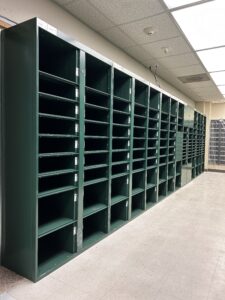
Carriers benefit from uninterrupted access to the rear of the lockers. Without needing to navigate around residents, students, or customers retrieving packages, delivery personnel can complete their work more quickly and efficiently.
Improved Privacy and Security
All package handling takes place behind a secured access point, preventing unauthorized individuals from viewing or interfering with items during sorting. This controlled environment enhances both privacy and security for the facility.
2. Enhanced Staff Efficiency and Workflow Optimization
A dedicated rear-access workspace is one of the most impactful advantages of a rear-loading system. This setup allows package handlers and staff to work more effectively by providing:
Streamlined Loading of Multiple Compartments
Staff can load several compartments in rapid succession from the back, without repeatedly opening and closing public-facing doors. This continuous workflow dramatically improves speed and efficiency during high-volume delivery periods.
A Dedicated, Organized Workspace
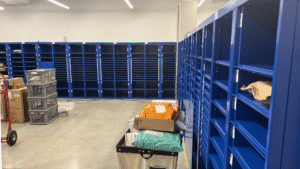
Rear-access systems support a true back-of-house processing environment. Staff can sort, scan, and organize incoming packages using tools such as utility carts, counters, and sorting stations—keeping operations orderly and logistics-focused.
Uninterrupted Operations
Because staff work independently from the user-facing side, deliveries can be processed even while recipients are picking up their items. This separation eliminates interruptions and allows both activities to occur simultaneously without conflict.
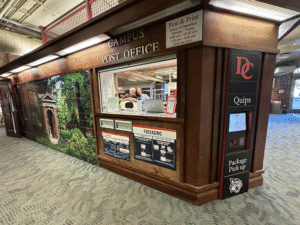 3. Cleaner, More Aesthetic Front Appearance
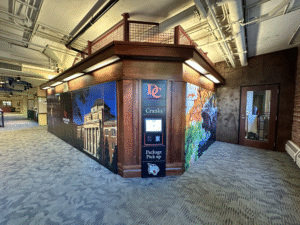
Rear-loading lockers offer a superior visual presentation because all operational components—hinges, service access doors, and loading mechanisms—are housed within the internal structure. As a result, the public-facing side of the locker bank remains clean, smooth, and architecturally refined.
This is particularly valuable in high-visibility spaces such as:
-
Main lobbies
-
Corporate reception areas
-
 Executive suites
 -
Luxury residential buildings
In these environments, rear-loading lockers blend seamlessly into the surrounding design, minimizing visual clutter and preserving the space’s intended aesthetic. They function as both a practical solution and a subtle design element, contributing to a more polished and professional user experience.
Conclusion
Both rear-loading and front-loading locker systems offer clear advantages, and the right choice depends on a facility’s layout, usage patterns, and operational priorities.
-
Rear-loading lockers deliver superior efficiency, enhanced security, and a cleaner architectural aesthetic—ideal for buildings with a dedicated service room or mailroom infrastructure.
-
Front-loading lockers provide greater installation flexibility and easier placement when a rear-access space is not available.
By understanding the strengths of each configuration, facility managers can select the locker solution that best aligns with their building design, workflow needs, and long-term goals.